

Electric motors remain fundamental to global industrial output, transportation, consumer appliances, and emerging sustainable technologies. From factory automation and HVAC systems to electric vehicles (EVs) and renewable power generation, the performance of electric motors directly impacts energy consumption and operational costs across sectors. As efficiency standards tighten and energy prices rise, manufacturers are increasingly focused on reducing core losses and improving motor efficiency. One of the most effective ways to achieve this is through precise engineering of the motor core using high‑quality motor laminations. These components are essential in minimizing electromagnetic losses and enabling more effective conversion of electrical energy into mechanical work.
Motor laminations form the core of both stator and rotor assemblies in electric machines. Traditionally composed of thin electrical steel sheets, these laminations reduce eddy current losses and heat generation relative to solid core designs. The global motor lamination market is expanding in tandem with growth in demand for energy‑efficient systems, EV propulsion, industrial automation, and smart infrastructure. Analysts report a steady compound annual growth rate for lamination materials, driven by electrification trends and stringent regulatory efficiency requirements.
At its core, a motor operates through electromagnetic interaction between the stator’s magnetic field and rotor currents or magnets. A solid piece of magnetic material would allow large circulating currents to form within the core under alternating magnetic fields. These currents, known as eddy currents, generate heat and consume energy without performing useful work. By contrast, a stack of thin, insulated lamination sheets interrupts these currents, significantly reducing core loss and improving overall machine efficiency.
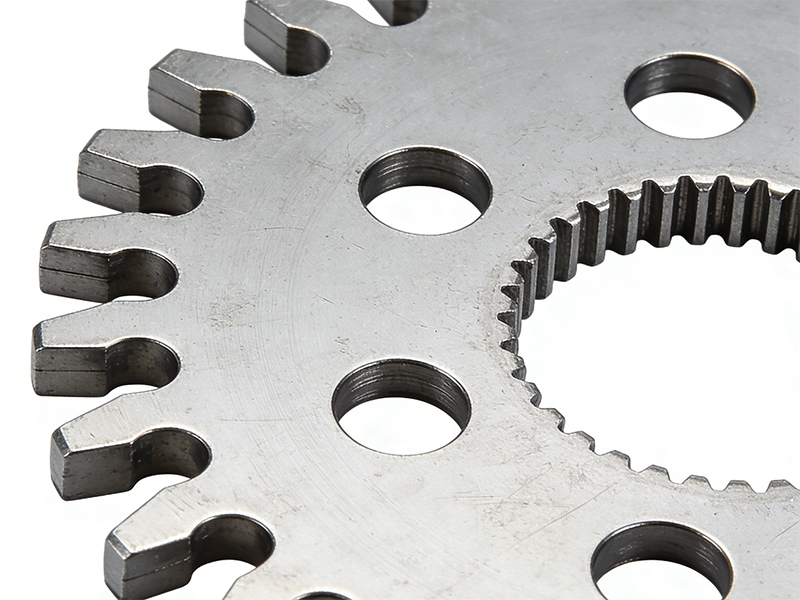
Motor laminations are typically stamped or cut into specific shapes and then stacked, bonded, welded, or interlocked to produce the precise geometry required for each motor design. The thickness of each lamination sheet, the material grade, and the method of assembly all influence magnetic performance and thermal behavior. In high‑performance applications, precise control over these parameters is critical to achieving targeted power density, torque output, and thermal stability.
Structure
Motor laminations are engineered thin plates that collectively form the magnetic core of an electric motor. These stacks interface directly with the winding system and are designed to guide and concentrate magnetic flux with minimal loss. Typically, stator laminations include slots to accommodate coil windings, while rotor laminations may offer features optimized for reduced inertia or higher torque.
Materials
Material choice is central to lamination performance. The most common base material is electrical steel, often silicon‑enhanced, which balances magnetic permeability with low hysteresis and eddy current loss. Silicon content typically ranges from 1.5% to 4%, enhancing resistivity and reducing core loss while maintaining workable mechanical properties.
High‑end applications—such as aerospace, EV traction motors, and industrial drives—may utilize specialized alloys including nickel‑iron or cobalt‑iron blends. These alloys can deliver higher saturation flux density, improved magnetic performance at elevated operating temperatures, and reduced losses at high frequencies, albeit at increased material cost.
Manufacturing Processes
The two primary fabrication methods for motor laminations are stamping and laser cutting. Stamping utilizes high‑tonnage presses and custom dies to rapidly form precise shapes from coil steel, suitable for large‑volume production. Laser cutting offers flexibility for prototyping and small runs, with reduced tooling costs and excellent dimensional precision.
Post‑cutting, many manufacturers apply insulating coatings to each lamination to further suppress eddy currents and protect against corrosion. These coatings can be inorganic (oxide films) or organic polymers selected based on thermal and environmental requirements. Precision stacking and bonding—or welding in high‑performance cores—ensures the final assembly maintains tight tolerances and consistent magnetic pathways.
Several technical factors determine the effectiveness of motor laminations in enhancing motor performance:
Sheet Thickness: Thinner laminations reduce the area available for eddy currents, sharply cutting associated losses. However, handling extremely thin materials demands higher‑precision tooling and more careful processing.
Material Grade: The magnetic properties of the substrate material—including permeability, hysteresis loss, and saturation flux density—govern how effectively the core guides magnetic lines of force. Higher performance materials typically cost more but deliver better efficiency.
Insulation Quality: Uniform, high‑temperature insulation coatings prevent electrical contact between lamination layers. These layers are critical to maintaining low eddy currents and ensuring long‑term reliability under thermal cycling.
Stacking Precision: Accurate alignment and fastening of lamination sheets affect mechanical balance and magnetic uniformity. Misaligned stacks can introduce vibration, acoustic noise, and uneven flux distribution, degrading performance.
Choosing a lamination supplier is not simply about cost. Quality and consistency are paramount in applications where motor performance directly affects product viability. Key criteria include:
Material Sourcing: Access to high‑quality electrical steel and alloy inputs paired with traceability and certification ensures magnetic performance meets specifications.
Manufacturing Capability: Suppliers should demonstrate precision stamping or cutting capabilities, including advanced tooling, inspection systems (e.g., CMM measurement), and coating processes.
Quality Management: Adherence to ISO standards and documented quality control procedures including dimensional checks, magnetic testing, and batch traceability.
Technical Support: Practical engineering collaboration helps align core design with material and process constraints, reducing iteration cycles and production risk.
Long‑term reliability requires robust supply chain integration, particularly for sectors like automotive, energy, and aerospace where delivery continuity and traceable process controls are mandatory.
Despite widespread use, motor lamination manufacturing faces several challenges:
Material Variability: Electrical steels and exotic alloys can present variable magnetic properties between batches, requiring comprehensive incoming inspection and consistent heat treatment practices.
Process Complexity: Maintaining tight tolerances across high‑volume production while avoiding stress‑induced distortion in thin sheets demands advanced tooling and process controls.
Thermal Management: Motor cores must operate over wide temperature ranges. Inadequate insulation or poor lamination stacking can lead to overheating and accelerated degradation.
These technical hurdles drive demand for suppliers with proven process reproducibility and domain expertise.
High‑quality motor laminations are found across an extensive range of applications:
Industrial Drives: Precision manufacturing equipment and heavy‑duty conveyors benefit from low‑loss cores that improve operational efficiency and reduce downtime.
Electric Vehicles: EV traction motors require materials with low core loss and high saturation limits to support extended range and high torque density.
Renewable Energy: Wind turbines and hydroelectric generators use laminated cores scaled for high power handling while mitigating eddy current losses over prolonged operating cycles.
Consumer Appliances: From washing machines to HVAC blowers, laminated cores help reduce energy consumption while maintaining quiet operation.
In each context, lamination design contributes to enhanced efficiency, reduced operating costs, and improved lifecycle performance.
The motor lamination industry is evolving alongside broader electrification and sustainability trends:
Advanced Alloy Development: Research continues into materials that combine reduced loss with higher thermal capability, supporting higher speed and higher power designs.
Automated Manufacturing: Industry‑wide adoption of robotics and laser‑based systems enhances precision and productivity, especially for custom and small‑batch orders.
Digital Quality Assurance: Integration of real‑time inspection systems and digital twin modeling helps predict and mitigate quality issues before they propagate into production.
Emerging applications, such as integrated motor drives and high‑frequency power electronics, place additional demands on core materials and designs. These innovations signal continued growth and refinement across the motor lamination ecosystem.
Q1: Why aren’t electric motor cores made as solid pieces of metal?
Thin lamination stacks dramatically reduce the formation of eddy currents, which are circulating currents induced under alternating magnetic fields that waste energy and generate heat. Stacked laminations interrupt these currents and improve efficiency.
Q2: How does lamination thickness influence performance?
Thinner sheets limit the loop size available for eddy currents, reducing core losses. However, very thin material requires precise handling and specialized equipment.
Q3: What are typical materials for motor laminations?
Electrical steel (often silicon‑enhanced) is standard for many motors, while nickel or cobalt alloys serve high‑performance niches.
Q4: Can coatings improve lamination performance?
Yes. Insulating coatings reduce inter‑layer conduction and may protect against corrosion and high temperatures, enhancing reliability.
 RELATED
 Mobile: +86 13738592999
 Telephone: +86(576) 89307999
 E-mail: sales@zjxinzheng.com
 Address: Coastal Industrial City, Sanmen
County, Taizhou City, Zhejiang Province, China
Copyright © Zhejiang Xinzheng Electromechanical Technology Co., Ltd. All Rights Reserved.
This website uses cookies to ensure you get the best experience on our website.

 Pусский
 한국어
한국어 Tiếng Việt
 中文
中文



 WhatsApp
 Phone
Phone