

The transition from conventional mechanical systems to electric drives has accelerated across multiple industries. Electric vehicles (EVs), hybrid powertrains, industrial automation, and smart appliances require motors capable of delivering precise performance under varied load conditions. Efficiency standards such as IEC 60034-30, NEMA Premium, and emerging EcoDesign regulations are driving designers to focus on minimizing core losses and improving overall motor performance.
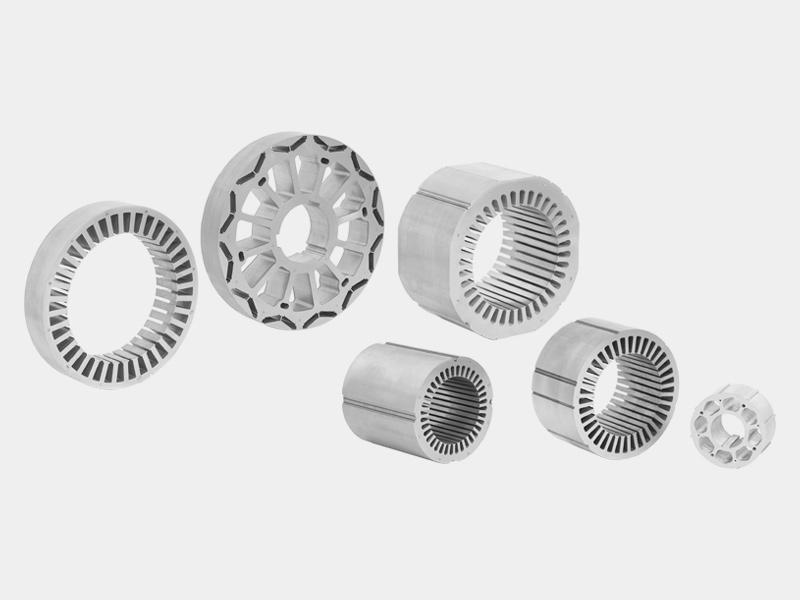
Magnetic core laminations form the backbone of an electric motor’s stator and rotor assemblies. By providing a tailored path for magnetic flux while limiting eddy currents, high-quality laminations significantly influence efficiency, torque density, and noise performance. The need for customizable laminations arises from the diversity of motor types—including AC induction, permanent magnet synchronous, DC, and high-speed motors—each with specific geometric and material requirements.
At its core, a motor converts electrical energy into mechanical motion through electromagnetic interactions. Laminations are thin sheets of electrical steel or specialized alloys, stacked to form the stator and rotor cores. The insulation between layers is essential to minimize eddy current losses, particularly in high-frequency applications.
Customizable laminations enable precise control of the magnetic path. Parameters such as lamination thickness, slot geometry, and stacking orientation directly affect flux density, hysteresis losses, and motor torque characteristics. Optimizing these factors can reduce energy consumption and thermal buildup while maintaining structural integrity.
Modern laminations leverage advanced electrical steels, including grain-oriented and non-oriented grades. Non-oriented steels offer isotropic magnetic properties suitable for rotating machines, while high-silicon alloys reduce hysteresis losses. Emerging materials like amorphous metals and nanocrystalline alloys are explored in specialized applications requiring ultra-low losses and high-frequency performance.
Different motor types demand unique lamination shapes and features. For instance, skewed laminations reduce torque ripple and vibration in high-speed motors, whereas deep-slotted laminations enhance magnetic flux control in high-torque applications. The ability to customize lamination geometry allows engineers to optimize motors for specific operational requirements.
Laminations form the mechanical and electromagnetic framework of the motor core. They must maintain dimensional precision while supporting winding arrangements and rotor assembly. Improper stacking or misalignment can lead to uneven magnetic flux distribution, increased losses, and vibration.
Key performance characteristics of motor laminations include:
Core Loss: The sum of hysteresis and eddy current losses, affecting overall efficiency.
Permeability: Determines how easily the core conducts magnetic flux.
Thermal Stability: Laminations must withstand operating temperatures without degradation.
Dimensional Accuracy: Ensures proper air gap alignment and consistent rotor-stator interaction.
Material choice influences both electromagnetic performance and manufacturability:
Silicon Steel: Offers a balance between cost and efficiency; commonly used in automotive and industrial motors.
Amorphous Metals: Extremely low core losses, suitable for high-efficiency or high-frequency applications, though higher cost and specialized processing are required.
Nanocrystalline Alloys: High permeability and low losses at high frequencies, ideal for compact, high-performance designs.
Precision in manufacturing is critical. Typical steps include:
Stamping/Blanking: High-accuracy cutting of lamination profiles from coated steel coils.
Insulation Coating: Application of dielectric layers to reduce interlamination eddy currents.
Heat Treatment/Annealing: Relieves mechanical stress and enhances magnetic properties.
Stacking and Bonding: Laminations are aligned, stacked, and bonded for mechanical stability and magnetic consistency.
Advanced inspection methods, such as laser measurement and optical scanning, ensure that tolerances are maintained, preventing performance degradation.

The final performance of a motor is highly sensitive to lamination quality. Critical factors include:
Material Purity and Coating: Contaminants or uneven insulation increase core losses.
Dimensional Precision: Variances in lamination thickness or slot geometry affect air gap uniformity and flux distribution.
Stacking Accuracy: Misalignment or voids in stacks can lead to vibration, noise, and thermal hotspots.
Thermal Treatment: Proper annealing is necessary to relieve stress and optimize permeability.
Manufacturers often implement rigorous quality control, including batch testing for magnetic properties, visual inspection for defects, and measurement of stacking factor and flatness.
For B2B clients, sourcing high-quality laminations involves evaluating suppliers on multiple criteria:
Material Certification: Verified steel grades, magnetic property data, and traceable batch information.
Manufacturing Capability: Proven ability to produce complex lamination geometries with consistent tolerances.
Quality Management: ISO 9001 or IATF 16949 certifications indicate disciplined processes.
Technical Collaboration: Suppliers able to support custom designs and participate in iterative development cycles.
Reliability and Lead Time: Consistent delivery performance and responsiveness to production volume changes.
Partnerships with capable suppliers reduce risk and ensure consistent performance across motor production.
Despite technological advancements, several pain points persist:
High-Frequency Core Losses: Variable-speed drives increase eddy current effects, demanding thinner laminations and better insulation.
Cost vs. Performance Trade-offs: Premium materials improve efficiency but may increase manufacturing cost.
Thermal Management: Core heating affects both magnetic properties and winding insulation life.
Noise and Vibration: Slot design, lamination skew, and stacking precision must be carefully balanced to mitigate acoustic issues.
EV traction motors require high torque density and minimal losses. Custom laminations tailored to rotor and stator geometries reduce heat buildup and extend battery range.
Variable-speed motors in pumps, compressors, and conveyors benefit from lamination optimization for partial-load efficiency and thermal management.
Wind turbines and hydroelectric generators demand laminations that maintain magnetic performance under fluctuating loads and harsh environmental conditions.
Quiet operation, low torque ripple, and accurate motion control are achieved through specialized lamination designs with precise geometry and material selection.
Advanced Materials: Research into high-silicon steels, amorphous metals, and hybrid alloys continues to lower core losses and expand design options.
Simulation-Driven Design: Finite element analysis (FEA) and multiphysics modeling allow engineers to optimize lamination geometry and predict thermal behavior before production.
Additive Manufacturing: Emerging technologies may enable complex integrated lamination structures, though industrial-scale adoption remains limited.
Sustainability: Lifecycle analysis and material recycling are increasingly emphasized, reducing waste and improving environmental compliance.
The combination of customizable laminations, advanced materials, and digital design tools will define next-generation electric motor performance, supporting industry demands for efficiency, reliability, and compactness.
Q: Why are motor laminations used instead of solid cores?
A: Laminations reduce eddy current paths within the magnetic core, lowering losses compared to solid iron, especially at high frequencies.
Q: How does lamination thickness impact performance?
A: Thinner laminations reduce eddy current losses but are more expensive and harder to manufacture. Optimal thickness depends on operating frequency and design goals.
Q: Can customizable laminations improve motor efficiency?
A: Yes. Tailoring material, thickness, and geometry for specific motor types helps minimize core losses and optimize flux distribution.
Q: What should be considered when selecting a lamination supplier?
A: Material certification, manufacturing precision, quality management systems, technical support, and delivery reliability are key factors.
Q: Are all laminations suitable for all motor types?
A: No. Different motor types (AC, DC, high-speed, low-speed) have unique requirements for geometry, material, and thermal performance.
Customizable Motor Laminations for various electric motor types are essential for achieving high efficiency, precise control, and reliable operation. By combining advanced materials, precise manufacturing, and tailored geometries, engineers can optimize motor performance across applications from automotive and industrial drives to renewable energy and robotics. With the ongoing focus on electrification, regulatory compliance, and sustainability, customizable laminations will continue to play a critical role in defining the next generation of high-performance electric motors.
 Mobile: +86 13738592999
 Telephone: +86(576) 89307999
 E-mail: sales@zjxinzheng.com
 Address: Coastal Industrial City, Sanmen
County, Taizhou City, Zhejiang Province, China
Copyright © Zhejiang Xinzheng Electromechanical Technology Co., Ltd. All Rights Reserved.
This website uses cookies to ensure you get the best experience on our website.

 Pусский
 한국어
한국어 Tiếng Việt
 中文
中文



 WhatsApp
 Phone
Phone